

Best Organic Tallow Balm for Face: 2026 Guide
Table of Contents
- What Is Organic Tallow Balm and Why Is It Having a Moment?
- Benefits of Grass-Fed Tallow for Skin: The Science Behind the Hype
- Is Tallow Balm Good for Wrinkles? What the Evidence Shows
- How to Choose the Best Organic Tallow Balm for Face: A Skin Type Matching Guide
- Top Organic Tallow Balms for Face: Honest Picks for Every Skin Need
- How to Use Tallow Balm on Face for Best Results
- Tallow Balm vs. Plant-Based Moisturizers: An Honest Comparison
- Conclusion
Last Updated: August 22, 2026
Organic tallow balm sounds counterintuitive until you understand the science. This guide cuts through the noise with science-backed information on how tallow works, skin-type matching, the best products available, and red flags signaling trend-chasing without results.
Quick Picks:
- Best Overall: Simply Boujie Saffron Infused Whipped Tallow Balm, made-to-order, fragrance-free, saffron-enhanced
- Best for Sensitive Skin: Ancestral Cosmetics Tallow & Honey Balm (Unscented), minimal ingredients, no essential oils
- Best Multi-Purpose: VanMan's Tallow & Honey Face Balm, replaces multiple products in one jar
- Best for Dry/Aging Skin: Evolve Skin Care Tallow Face Cream, water-free, long shelf life
- Best Budget Entry: Ancestral Haven Soft Tallow Balm, non-greasy, absorbs quickly
What Is Organic Tallow Balm and Why Is It Having a Moment?
Organic tallow balm is a skin moisturizer made from rendered beef fat (suet) sourced from grass-fed, pasture-raised cattle and processed without synthetic additives. Grass-fed tallow carries a richer nutrient profile than grain-fed alternatives, including higher concentrations of fat-soluble vitamins and conjugated linoleic acid.
Interest stems from frustration with conventional moisturizers containing long synthetic ingredient lists. A well-sourced tallow balm is genuinely simple: rendered suet, perhaps a carrier oil, and nothing else. Quality separates from mediocrity through sourcing (grass-fed and finished), rendering process (low-heat preserves nutrients), and what gets added afterward.
Benefits of Grass-Fed Tallow for Skin: The Science Behind the Hype
Sebum Compatibility and Transdermal Absorption
Tallow's most compelling property is its structural similarity to human sebum. Both are composed primarily of triglycerides with comparable ratios of saturated and monounsaturated fatty acids. The skin recognizes tallow as familiar, supporting deeper transdermal absorption compared to plant-based oils that sit on the surface as an occlusive layer.
Grass-fed beef tallow includes oleic, palmitic, and stearic acids, the same building blocks your skin produces naturally. This dual action softens and conditions while sealing the moisturizing barrier against water loss. For compromised, dry, eczema-prone, or sensitized skin, this is significant. According to National Eczema Association guidance on barrier repair, supporting the skin's lipid barrier is foundational for managing chronic dryness and irritation.
Vitamins A, D, E, and K: What They Actually Do for Your Skin
Grass-fed tallow delivers all four fat-soluble vitamins in bioavailable form:
- Vitamin A: Supports cell turnover and collagen synthesis.
- Vitamin D: Plays a role in skin barrier regulation and inflammatory skin conditions.
- Vitamin E: A well-established antioxidant that neutralizes free radical damage and supports elasticity.
- Vitamin K: Associated with reducing dark circles and supporting capillary health.
These vitamins occur in tallow in their natural fat-soluble form, which skin can absorb directly. Grain-fed tallow has noticeably lower nutrient concentration, making grass-fed and finished sourcing a meaningful quality distinction.
Is Tallow Balm Good for Wrinkles? What the Evidence Shows
Tallow balm supports skin elasticity and hydration in ways that address fine lines. Vitamins A and E support collagen production and protect existing collagen from oxidative damage; conjugated linoleic acid has demonstrated anti-inflammatory properties; deep hydration plumps the skin's outer layers, reducing fine line visibility.
Tallow balm is not a clinical anti-aging treatment and won't replicate prescription retinoids or professional procedures. But as a daily moisturizer with genuine nutrient density, it addresses underlying factors, dehydration, barrier compromise, oxidative stress, that accelerate aging appearance. According to American Academy of Dermatology guidance on moisturizers and skin aging, consistent moisturization is one of the most evidence-supported strategies for maintaining skin appearance over time. Expect four to six weeks of consistent use before evaluating results.
How to Choose the Best Organic Tallow Balm for Face: A Skin Type Matching Guide
| Skin Type | Best Formula | Avoid | Application Timing |
|---|---|---|---|
| Dry / Mature | Rich tallow + rosehip or argan oil | Heavy beeswax as primary ingredient | Morning and night |
| Sensitive / Eczema-prone | Unscented, no essential oils | Citrus or spice-based essential oils | Night only initially |
| Normal / Combination | Tallow + jojoba or olive oil | Castor oil-heavy formulas | Night, or light morning use |
| Oily / Acne-prone | Minimal formula, no added oils | Coconut oil, heavy occlusives | Night only, spot test first |
| Aging / Wrinkle-focused | Tallow + vitamin-rich oils (saffron, rosehip) | Synthetic fragrance | Night treatment |
Comedogenic Rating Analysis: Will It Clog Your Pores?
Tallow itself has a comedogenic rating of approximately 2 on the 0-5 scale, low to moderate, comparable to argan oil and significantly lower than coconut oil at 4. Because it mimics your skin's own oils, it's less likely to block follicles than foreign lipid molecules. Some users experience minor breakouts in the first two to three weeks as their skin recalibrates. Spot testing on the jaw for a week before full-face application is sensible.
Ingredients to Look For, and Red Flags That Signal Greenwashing
Green flags:
- Grass-fed and finished tallow (not just "grass-fed")
- Cold-pressed carrier oils (jojoba, rosehip, argan, olive)
- Raw honey or beeswax for occlusive support
- No added fragrance or "natural fragrance"
- Paraben-free, synthetic filler-free
Red flags:
- "Grass-fed" without "finished" (animals may have been grain-finished before slaughter)
- "Natural fragrance" on the label (can legally cover hundreds of undisclosed synthetic compounds)
- Long lists of filler ingredients like glycerin, dimethicone, or PEG compounds
- No sourcing information for the tallow
- Vague claims like "farm-raised" or "humanely sourced" without verification
According to FDA cosmetic labeling regulations, manufacturers aren't required to disclose individual fragrance ingredients, making "fragrance-free" a meaningful distinction.
Top Organic Tallow Balms for Face: Honest Picks for Every Skin Need
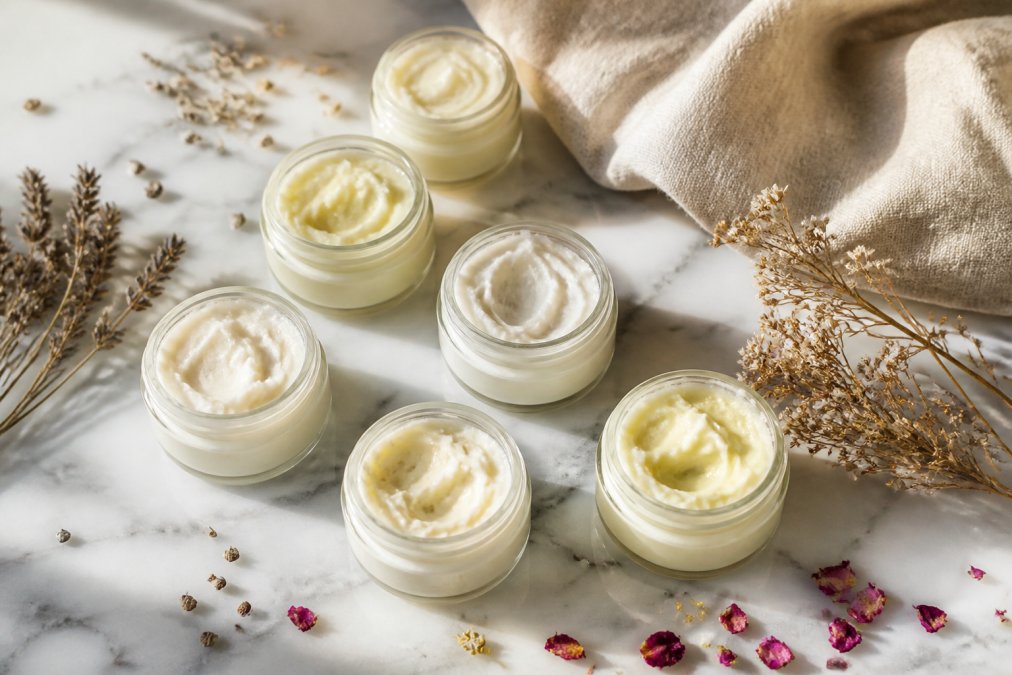
1. Simply Boujie Saffron Infused Whipped Tallow Balm, Best Overall
Simply Boujie's Saffron Infused Whipped Tallow Balm is the best organic tallow balm for face use because it's made to order, you receive a fresh product rather than warehouse stock. The formula uses 100% organic grass-fed and finished beef tallow, rosehip, argan, and castor oil alongside saffron for antioxidant and complexion support. It contains no fragrance, synthetic fillers, or parabens. The whipped texture absorbs without heavy residue, formulated for overnight use on face and neck.
Best for: Dry, mature, or aging skin seeking a clean, vitamin-rich night treatment.
Pros: Made-to-order freshness, grass-fed and finished sourcing, saffron adds luminosity support, completely fragrance-free.
Cons: Richness may be too much for oily skin during the day; made-to-order means slightly longer lead time.
2. VanMan's Tallow & Honey Face Balm (Classic), Best Multi-Purpose
VanMan's combines 100% grass-fed and finished beef tallow with organic raw honey, organic beeswax, and cold-pressed organic olive oil. The honey contributes healing and humectant properties; beeswax adds a breathable occlusive layer. A small amount covers the full face, making per-use cost reasonable.
Best for: Dry, tired, or irritated skin; eczema, psoriasis, or rosacea; anyone simplifying their skincare routine.
Pros: Highly concentrated formula, raw honey adds wound-healing properties, available in unscented version for sensitive skin.
Cons: Classic formula contains essential oils; some oily-skin users report temporary congestion during adjustment.
3. Ancestral Cosmetics Tallow & Honey Balm (Unscented), Best for Sensitive Skin
This formula is minimal: 100% grass-fed Irish beef tallow, raw honey, and cold-pressed olive oil. No essential oils, no fragrance, no extras.
Best for: Sensitive, eczema-prone, acne-affected, or damaged skin needing maximum simplicity.
Pros: Minimal ingredient list reduces reaction risk, absorbs quickly due to sebum compatibility, lasts several months with daily use.
Cons: Ships from Ireland; longer US delivery times; natural tallow scent may be noticeable.
4. Ancestral Haven Soft Tallow Balm, Best Budget Entry
Ancestral Haven offers an affordable entry point without sacrificing quality. The formula uses grass-fed beef tallow, beeswax, and jojoba oil. The non-greasy finish works reasonably well for normal-to-combination skin. Texture can run grainy in cool temperatures; brief warm-up between palms fixes it.
Best for: All skin types, particularly normal-to-combination skin seeking affordable entry into tallow skincare.
Pros: Non-greasy, absorbs quickly, balances oil production and reduces inflammation, paraben-free, synthetic fragrance-free.
Cons: Texture becomes grainy in cold storage; smaller brand with less third-party visibility.
5. Evolve Skin Care Tallow Face Cream, Best for Dry/Aging Skin
The water-free formula eliminates the need for synthetic preservatives, with a stated shelf life of up to two years. The base is organic grass-fed tallow and organic jojoba oil; organic sandalwood and orange essential oils add scent and skin benefits.
Best for: Dry, inflamed, or aging skin; anyone wanting a long-lasting product with clean preservation.
Pros: Water-free formula means no synthetic preservatives, long shelf life reduces waste, handcrafted in small batches.
Cons: Not recommended for active acne; heat-sensitive texture may soften during summer shipping.
6. Primally Pure Everything Balm, Best for Versatility
Primally Pure sources tallow from a regenerative, organic livestock farm and builds the formula around grass-fed tallow, organic olive oil, emu oil, and unrefined beeswax, with botanical extracts including marshmallow root, calendula, and rosemary. Emu oil is notable for documented skin penetration enhancement properties. It functions as a face balm, body balm, and spot treatment.
Best for: Anyone wanting one product for multiple uses across face and body.
Pros: Emu oil enhances penetration depth, beeswax provides genuine occlusive barrier function, strong sourcing transparency.
Cons: Premium pricing; heavier texture may not suit daytime facial wear.
7. FATCO Restorative Tallow & Honey Balm, Best for Whole-Body Use
FATCO uses pasture-raised tallow and honey in small-batch production, focusing on chemical-free formulation.
Best for: Anyone seeking a natural, chemical-free moisturizer for face and body.
Pros: Small-batch production for quality control, works with skin's biology for absorption, suitable for all ages.
Cons: Premium price for the size; full ingredient transparency requires additional research.
8. Sky and Sol Whipped Tallow Balm, Best for Stubborn Dry Patches
Sky and Sol's whipped formula uses grass-fed, grass-finished tallow, focusing on stubborn dry patches and damaged skin. The whipped texture makes application easier than firmer balms.
Best for: Stubborn dry patches, damaged skin, and anyone finding firmer balm textures difficult to apply.
Pros: Whipped texture for easy, even application, supports skin barrier rejuvenation, anti-inflammatory fatty acid profile.
Cons: Whipped texture softens in warm temperatures.
How to Use Tallow Balm on Face for Best Results
The most effective application method is the press-and-hold technique: warm a small amount between your fingertips, then press it into the skin rather than rubbing. This encourages transdermal absorption rather than surface spreading.
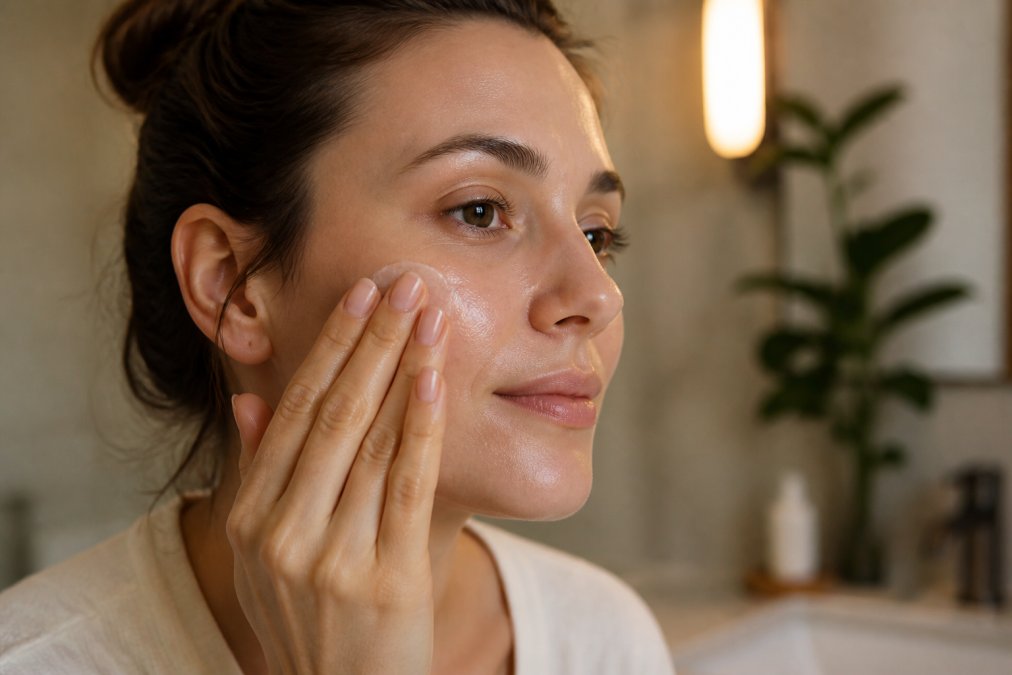
Start with clean, slightly damp skin. A pea-sized amount (roughly 0.3 grams) is sufficient for the full face and neck.
Application routine:
- Cleanse face with a gentle, non-stripping cleanser
- Pat skin to damp (not soaking wet)
- Warm a pea-sized amount between fingertips for 10-15 seconds
- Press into cheeks, forehead, nose, and chin using flat-palm pressure
- Gently press along the neck and décolleté if using for anti-aging support
- Allow 5-10 minutes before applying anything over the top
For daytime use, apply sunscreen after the balm absorbs. Tallow provides no UV protection. For nighttime use, apply as the final step in your routine.
DIY vs. Store-Bought: Safety, Shelf Life, and What You Sacrifice
Making tallow balm at home is possible, but trade-offs matter. Improperly rendered tallow retains moisture and proteins that accelerate rancidity. Store-bought products from reputable producers are rendered under controlled conditions with documented water content. Home rendering without proper equipment can produce products that go rancid within weeks.
Sourcing grass-fed and finished suet requires a relationship with a local butcher or farm and direct verification of grass-finishing. For most people, a quality store-bought option is safer, more consistent, and not significantly more expensive once you factor in ingredient costs and time.
Tallow Balm vs. Plant-Based Moisturizers: An Honest Comparison
Plant-based moisturizers vary enormously in quality. Some, like cold-pressed rosehip or pure jojoba, are excellent. Others are primarily water with synthetic emulsifiers and preservatives. The "plant-based" label tells you almost nothing about ingredient quality.
Tallow's structural advantage is sebum compatibility. Plant oils have different fatty acid profiles that skin processes differently. Linoleic acid-rich oils like rosehip are excellent for certain skin types but don't provide the same occlusive protection that tallow's saturated fat content delivers.
The ethical objection to tallow is legitimate. For people who avoid animal products, plant-based alternatives are appropriate. For people who eat meat and are open to animal-derived skincare, tallow from grass-fed, pasture-raised cattle is a byproduct of an existing supply chain rather than a primary driver of additional animal agriculture.
According to Environmental Working Group's Skin Deep cosmetic database, ingredient transparency and sourcing quality matter more than the plant-vs-animal distinction when evaluating skincare safety.
Navigating the tallow skincare category without a clear framework is confusing. The market ranges from exceptional products to trend-chasing formulas with minimal nutrient density. Simply Boujie's made-to-order approach addresses the freshness and sourcing transparency issues that matter most: grass-fed and finished tallow, organic nourishing oils, and no synthetic additives. Shop the Simply Boujie Saffron Infused Whipped Tallow Balm to experience the difference a properly sourced and formulated organic tallow balm makes for your skin.
Frequently Asked Questions
Is tallow balm actually good for your face?
Grass-fed tallow balm is well-suited for facial use because its fatty acid profile closely mirrors the skin's natural sebum. This structural similarity supports deep absorption rather than sitting on the surface. It acts as both an emollient and an occlusive, softening skin while sealing in moisture. Products made from 100% grass-fed and finished beef tallow also deliver fat-soluble vitamins A, D, E, and K, which support barrier repair, elasticity, and overall skin health. Those with dry or mature skin tend to see the most noticeable results.
Is grass-fed tallow balm non-comedogenic for facial skin?
Tallow has a comedogenic rating of around 2 to 3 on a scale of 0 to 5, which places it in the low-to-moderate range. For most skin types, including normal, dry, and mature skin, this is unlikely to cause breakouts. Those with oily or acne-prone skin should patch-test first and consider using a lighter application at night rather than throughout the day. Formulas that pair tallow with jojoba oil, which has a comedogenic rating of 2, tend to feel less heavy and absorb more readily.
Which organic tallow balm is best for wrinkles?
For wrinkle support, look for an organic tallow balm that combines grass-fed beef tallow with ingredients like rosehip oil, saffron, or argan oil. These additions bring antioxidants and compounds that support collagen and skin elasticity alongside tallow's own vitamin A content. The Simply Boujie Saffron Infused Whipped Tallow Balm is formulated specifically for this purpose, designed as an overnight treatment for face and neck. Consistent nightly use on clean skin tends to deliver the most visible improvement over time.
What should I look for when buying organic tallow balm?
Prioritize balms made from 100% grass-fed and grass-finished beef tallow, not grain-fed, since pasture-raised sources yield higher levels of conjugated linoleic acid and fat-soluble vitamins. Check that the formula is free from synthetic fillers, parabens, and added fragrance, especially for sensitive skin. Whipped textures absorb more easily than dense balms. For sensitive or eczema-prone skin, choose a fragrance-free, hypoallergenic formula. Made-to-order batches, like those from Simply Boujie, also reduce the risk of rancidity from sitting in warehouse storage.
Can tallow balm help with sensitive or eczema-prone skin?
Tallow balm is a reasonable option for sensitive and eczema-prone skin because it contains no synthetic preservatives, fragrances, or alcohol, common irritants found in conventional moisturizers. Its fatty acids help reinforce the skin's moisture barrier, which is often compromised in eczema. Fragrance-free formulas are the safest starting point. Always patch-test on a small area of skin for 24 to 48 hours before applying to the face. If redness or itching occurs, discontinue use and consult a dermatologist.
This article was written using GrandRanker